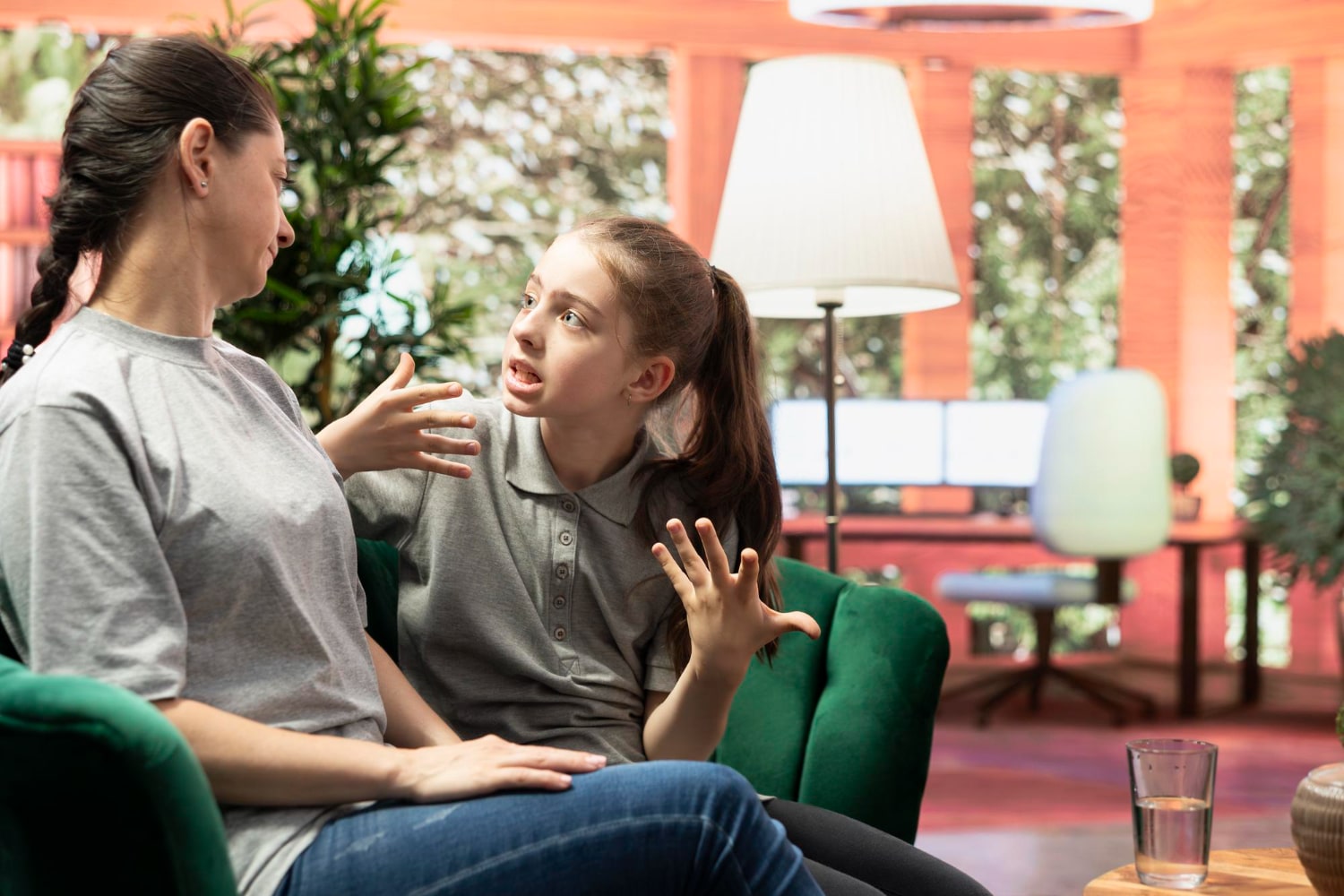
Have you ever felt your stomach twist before a difficult conversation? Or your chest tighten in silence?
Our bodies speak—often before our words do.
We say things like “my heart sank,” “a knot in my stomach,” or “it was a gut-wrenching moment.”
These aren’t just poetic phrases—they’re translations of what the body is trying to tell us.
The body speaks in sensations.
Feelings and sensations are the body’s language.
When the mind becomes too full, too fast, too excited—or too fearful—the body steps in to say what words cannot.
They are signals—calls to pause, to reflect, to listen.
This is the mind-body connection at work.
Every emotion leaves a physical echo.
Every unspoken feeling finds a place to land—in the chest, the stomach, the jaw, the breath.
When we become fluent in this inner language, healing becomes possible.
Listening to the body isn’t weakness.
It isn’t oversensitivity.
It’s wisdom.
It’s saying: “I trust myself enough to feel what’s real.”
So the next time your body sends a message—a spine-chilling shiver, a chest-tightening sorrow, a stomach-turning dread—don’t just numb it or push through.
Pause.
Listen.
Because when the body speaks, it’s not complaining.
It’s communicating.
Pranic Healing has transformed my life in an incredible way. I have observed a sudden shift in my thought process, attitude since then. A noticeable change in my cholesterol issues was seen after I started taking Pranic Healing sessions. Practicing 'The Meditation on Twin Hearts' and applying forgiveness in my life have helped me a lot to lay off heavy burdens of collected emotions since long. I now feel so much relieved and empowered.

Pranic Healing Treatments for conceiving have miraculously worked in my case when I was left with no hope. It was exceedingly a difficult phase of my married life. After application of Advanced Pranic Healing Techniques, things turned out positive. I was blessed with a tiny tot. The sessions have helped me enjoy this phase not only physically but also psychologically. Heartfelt gratitude to the great Guru and his teachings.

I am a dentist by Profession. I had to undergo a gum graft surgery in the month of August 2019. The strange part was that I had a sudden bone and gum tissue loss within a span of 3 weeks, which is ideally impossible in medical terms as it takes more time even if it is a case of periodontium with infection. I feared losing my teeth which would have impacted extremely in my career. Along with regular medicines, application of pranic sessions have remarkably accelerated the healing rate, regeneration rate. Pranic Psychotherapy have helped me to be stable during entire episode. I would describe it as a natural and safer way to achieve better results. Medical Treatments at times are invasive or unnecessary whereas pranic healing heals the body naturally and is a deep science which is explained in medical science too.

My Cervical Spondylitis was almost fully relieved in just 3-4 weeks by applying advance Pranic Healing techniques. I was finding it extremely difficult to do even small things with my stiff neck. I had never thought I would get rid of those handful of medicine pills this easily. It is more than a year now and the pain has not re-occurred.

I was introduced to the Pranic Healing as an adamant case of Addiction. It was a long persistent issue may be of 10-12 year. I tried most of the remedies, therapies to get rid of it but hardly successful…Applying Pranic Healing was also a matter of trial and error for me. Within a span of hardly 2 to 4 weeks, remarkable changes were noticed… my liquor intake was reduced substantially. In fact, the desire to take alcohol was drop downed and that too without having any withdrawal symptoms.

Like many other student, my daughter had Math Anxiety. Despite doing good in other subjects, her poor performance in math was a major concern for us. A friend suggested to try Pranic Healing sessions for her math anxiety and to our surprise, results were so magical. Her approach towards math has completely changed. Now she not only studies math with calmness and treats it like any other normal subject. she also breezes through her tests and exams smoothly with ease.

Me and my family members are kind of regular recipients of Pranic Healing with Tatva Wellness from last so many years and have given us the much-needed help and support each time. During the period of Mar-April 2020 where the Covid-19 pandemic was at it’s high peak with little awareness and no confirmed line of treatment, me and my husband were suffering with extreme fatigue, sore throat followed by the breathlessness. Far away sitting on foreign land with no family or close friends around to help except our doctor that too supporting distantly. we were stuck in our home; the symptoms were really turning bad that it took hard to even walk to the washroom. Later a week, we approached Tatva Healing Centre and started taking healing sessions. In just few sessions, our health started improving making our breathing comfortable. Within two weeks, we were completely able to breath normally and felt much stronger. Pranic Healing was a life savior during this trying times. Thanks a ton, to Archna and Tatva.

Pranic Healing Sessions helped me a lot to deal with my Postpartum depression. Forgiveness techniques, helped to change perspective of things, situations and people around me. Within 3 days of the sessions, i started feeling calm and still. It gave me a sense of positivity. I am super grateful to the team that healed me! God bless you all!